Beyond the Flames: Koppers Fire Investigation Continues as Attorney General Pursues Separate Pollution Case
From sulfur dioxide monitoring gaps to an overflowing tar tank, the state’s lawsuit lists years of alleged problems at Koppers. Neighbors and officials want answers.
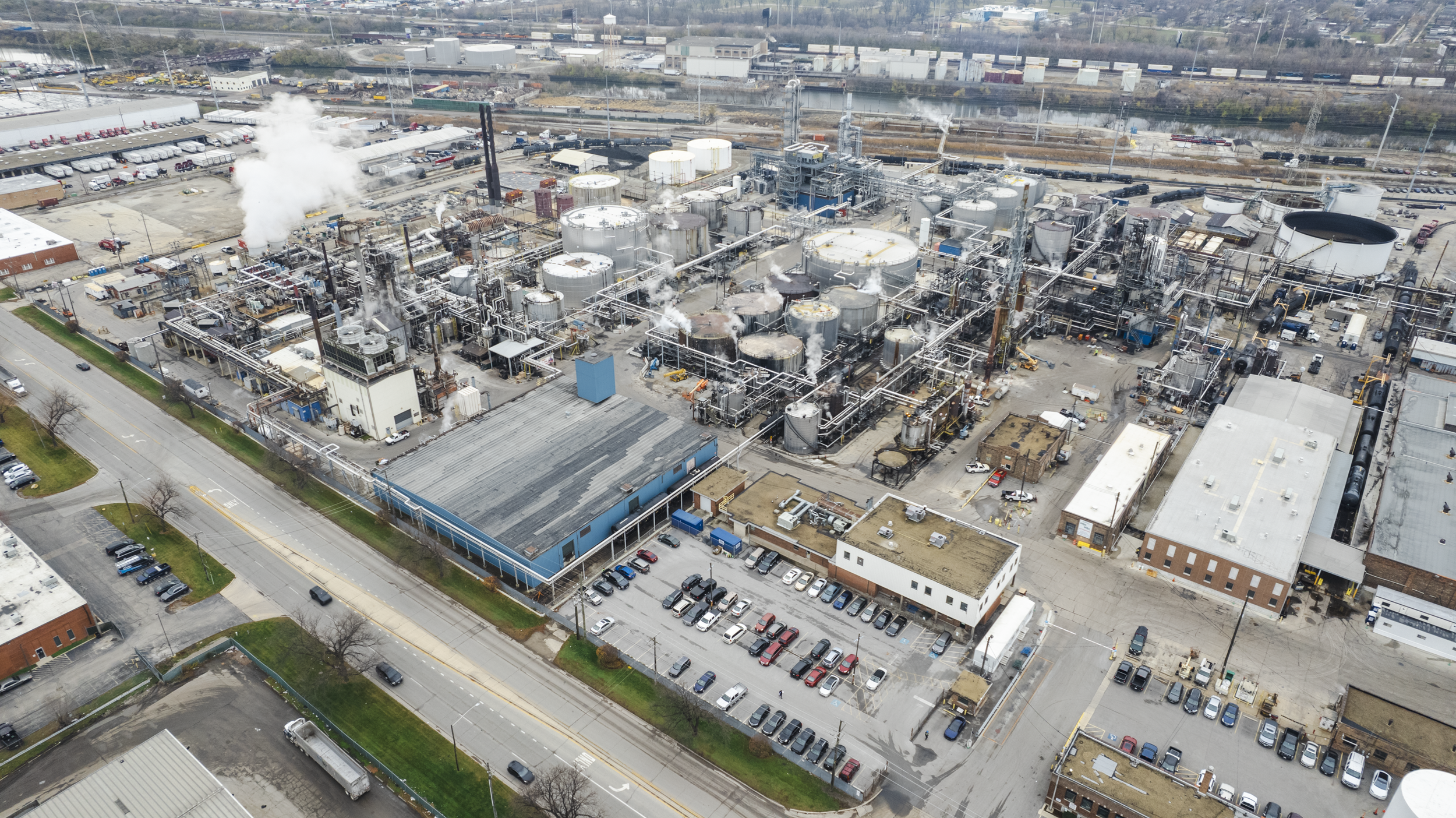
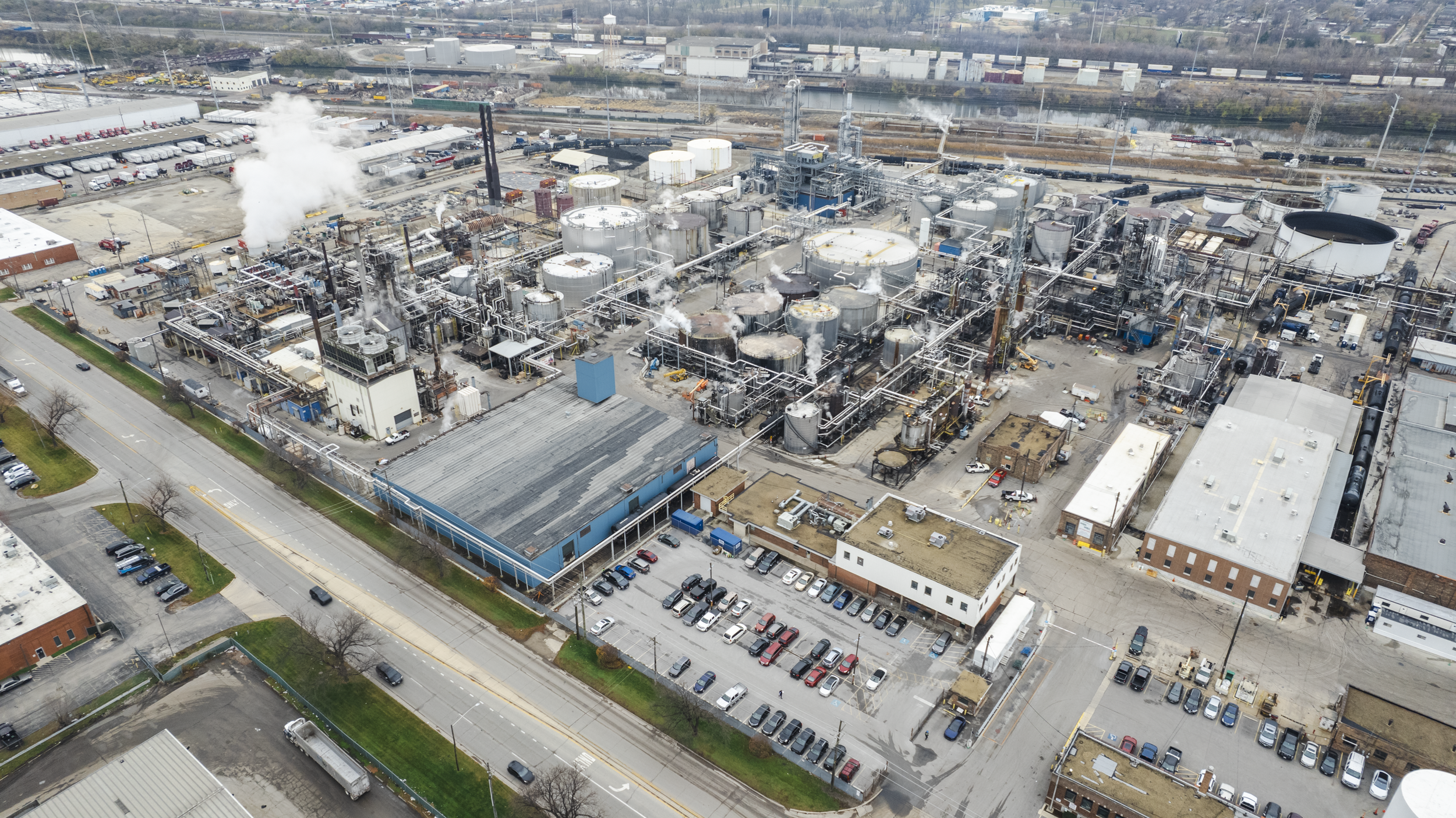
Koppers Coal Tar Plant, November 22, 2023, located on the 3900 block of South Laramie Ave in Stickney, Ill., on the border of Cicero, Ill. Jesus J. Montero / Cicero Independiente
By Leslie Hurtado
More than three months after a tank fire sent flames and black smoke above Koppers’ Stickney chemical plant, its cause remains under investigation. The Illinois Environmental Protection Agency (Illinois EPA) said the fire was confined to Tank 31, which held about 16,600 gallons of petroleum distillate. The tank remains out of service.
Lidia Gomez, a mother of two school-age children who has lived on 52nd Court for about 10 years, saw the flames from Cicero Stadium.
When she returned home from her kids’ practice, she said her windows were closed and her window air conditioner was off. Still, both of her air purifiers turned red and did not return to green until about 2 a.m.
“It just started climbing, climbing and climbing, and it went to a 300 [PM2.5] reading,” Gomez said. “My son's like, ‘Mom, oh my gosh!’”
A PM2.5 concentration of 300 micrograms per cubic meter, if sustained for 24 hours, would fall within the Environmental Protection Agency’s (EPA) hazardous range. But Gomez’s purifier recorded just a single reading inside her home, while the monitoring cited by Illinois EPA measured gases around the fire. The agency reported no PM2.5 results and did not test inside nearby homes.
Although the investigation continues, the fire is not part of the state’s lawsuit against Koppers. Three weeks after the fire, Illinois Attorney General Kwame Raoul filed a lawsuit containing 34 counts alleging years of environmental violations at the plant.
The Illinois EPA had referred alleged violations to the attorney general before the fire, and the state’s complaint draws on company reports and state inspections dating back years.
A Cicero Independiente review of the complaint found that Koppers' required sulfur dioxide monitoring system was allegedly not operating for a combined total of at least 1,771 hours across five separate reporting periods from July 2019 through June 2023.
The state alleges Koppers increased the amount of raw material fed into its phthalic anhydride reactors, a chemical used in plastics, solvents and resins, when the system was down, even though its permit required that amount to remain steady during monitoring outages.
On May 6, 2024, Illinois EPA received 19 odor complaints from Cicero and five nearby suburbs. Koppers later reported that a valve was left open during a tar transfer, causing a tank to overflow and spill about 70,000 gallons. Koppers calculated that the spill released 15.8 pounds of chemical vapors into the air each hour, nearly twice the legal limit of 8 pounds per hour, according to the complaint.
Koppers announced May 8 that it planned to end distillation and chemical production there by Dec. 31.
Years of smoke, odors and complaints
The complaint also cites separate fires in 2020 and 2021. The state alleges smoke from those fires obscured more than 30% of the view behind the plant exceeding the limit allowed under the plant’s permits. In February 2025, 13 residents across six communities, including Cicero, reported chemical or burning odors, headaches and difficulty breathing.
The lawsuit does not state a total penalty. Most counts seek up to $50,000 per violation, plus penalties for each day a violation continues. The state also asks a judge to order Koppers to stop and correct the violations.
“Koppers has continuously failed to follow laws that protect against high levels of dangerous pollutants entering our atmosphere,” Raoul said in a statement announcing the lawsuit. “I will continue to work to protect communities from the health and environmental impacts of pollution and hold companies accountable for violations of our environmental laws.”
In a written response to Cicero Independiente, Koppers said it is responding through the legal process and does not comment on pending litigation or ongoing interactions with regulators.
Felipe Valdez, a wastewater treatment plant operator at the Metropolitan Water Reclamation District (MWRD) facility, did not witness the May 27 fire. He learned about it from news reports and saw no lingering smoke when he returned to work.
“So nobody [at work] told us anything,” Valdez said. “Everything was just so quiet.”
The fire concerned Valdez because he works next to Koppers. Valdez recalled reporting a strong odor after it gave him a headache.
“I mean, part of my job is to differentiate different smells,” Valdez said. “And some days are bad, and some are worse, really worse.”
Valdez saw cranes at Koppers on two occasions and railroad cars moving there daily during late August. The activity made him skeptical that Koppers would end production in December, although the deadline had not passed and he did not know what work was underway.
The fire remains unexplained
Illinois EPA said the May 27 fire started shortly after 6 p.m. and remained confined to Tank 31. The fire lasted about 34 minutes and consumed about 16,600 gallons of petroleum distillate inside a tank capable of holding 109,000 gallons. The tank was removed from service and will not be replaced. Koppers and a third-party consultant are investigating the cause and are expected to share their findings with the Illinois EPA.
Petroleum distillate is a broad category of liquids made from petroleum. When these liquids burn, they can produce smoke containing fine particles, soot, carbon monoxide and other chemicals. Federal guidance says smoke can irritate the eyes and lungs and worsen existing heart or lung conditions. Those general risks do not establish what nearby residents inhaled during this fire.
Stickney firefighters used water and foam that did not contain PFAS, a group of long-lasting chemicals that break down very slowly. The Illinois EPA said the runoff was contained on the property and no injuries were reported.
The agency said the fire department and hazardous materials teams found no danger to nearby residents because the fire was contained and winds carried smoke away from residential areas. They claim the first response team and Koppers concluded that monitoring found no hazardous air conditions near the fire.
The agency’s letter reports carbon monoxide at 10 parts per million and methane and hydrogen sulfide at 0. However, it does not identify the exact petroleum distillate, the fourth reading from the four-gas monitor, where or when measurements were taken, the complete monitoring logs or a chemical analysis of the smoke.
The day after the fire, the Occupational Safety and Health Administration (OSHA) opened a partial safety inspection based on a referral. The public record does not identify who made the referral or state whether the inspection concerned the fire.
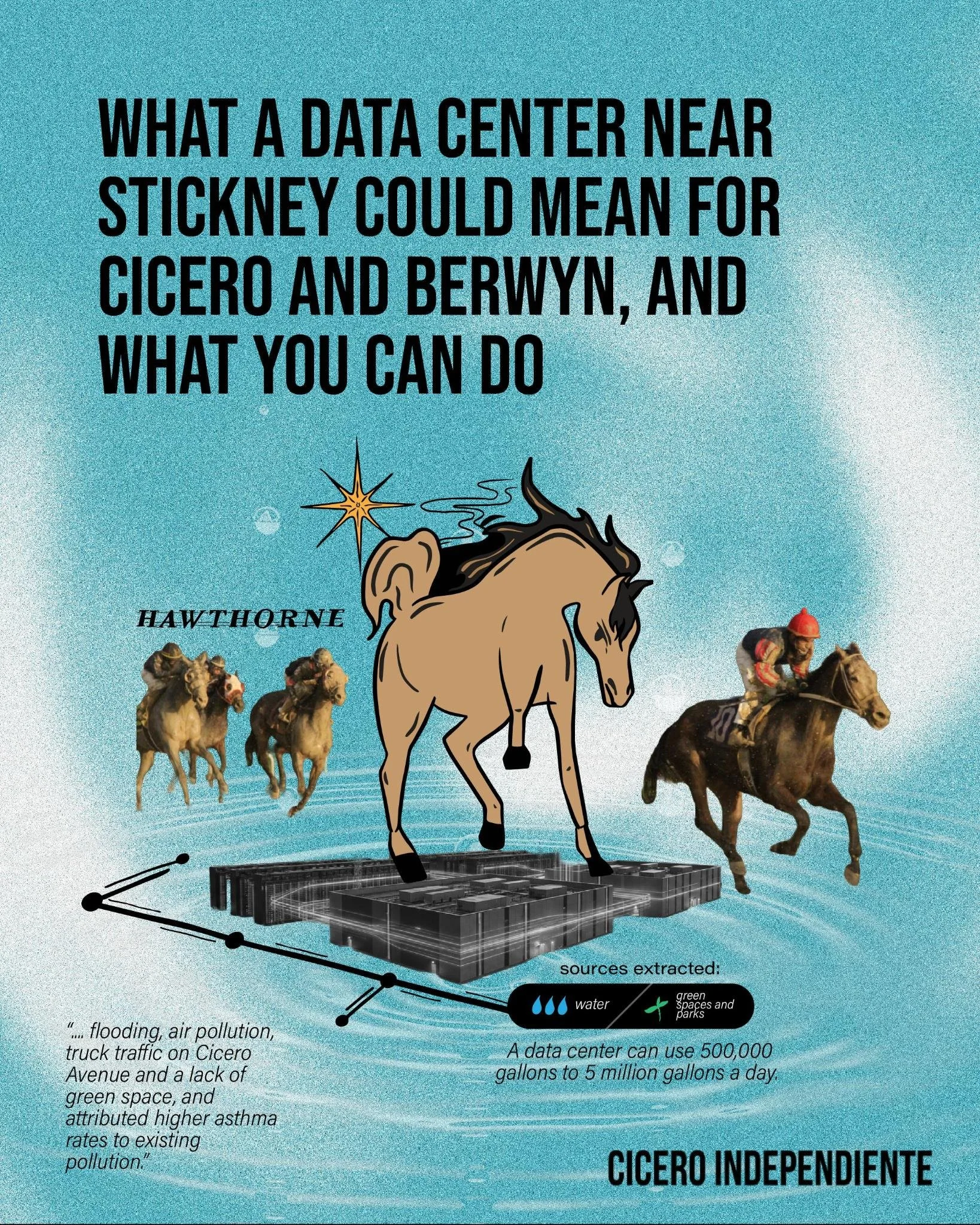
Valdez urged residents to report tar or asphalt odors so agencies can document complaints, investigate their sources and follow up. He also said public concern over an unconfirmed data center proposed for the Hawthorne Race Course property should not divert attention from Koppers.
“You are so concerned about the data center, and you are not paying attention to the pollution that is being created by Koppers,” Valdez said, recalling what he wrote in a community Facebook group.
Officials seek more answers
Two days after the fire, U.S. Rep. Jesús “Chuy” García asked Illinois EPA to release information about the cause and plans for preventing another incident. He also requested public meetings and information about the site’s closure.
“Residents deserve timely, accurate information about environmental monitoring, contamination, cleanup, and the future of the site,” García wrote to Cicero Independiente. “I have urged the Illinois EPA to make monitoring data, findings and updates readily available to the public, including in multiple languages. I have also called for public meetings and community briefings where residents can ask questions and receive clear answers.”
On June 9, the Town Board of Cicero unanimously adopted Resolution “R 65-26”, asking the Illinois EPA to investigate activities at Koppers on Cicero’s behalf. The published minutes record no discussion and do not describe any testing, cleanup, deadlines or public reporting requirements.
The vote came more than two years after Cicero Independiente and MuckRock reported that Cicero and Stickney officials had not answered repeated questions about disputed Koppers violations.
By July 2024, the newsrooms reported that four open Illinois EPA cases involving the plant had been forwarded to the attorney general.
What Happens Next
In an Aug. 6 federal filing, Koppers said it believes a penalty is likely but did not disclose the amount. The company said resolving the case could also require it to end some operations and withdraw air permits. Koppers said it is “vigorously defending” the case.
According to case records, the next court date scheduled is on Nov. 17 at the Richard J Daley Center.
Gomez said her family is considering leaving Cicero if conditions do not improve.
“We are thinking about moving if nothing happens in [Cicero] because my dad's getting older and my kids as well. I don't want them to grow up in an area where they can't even enjoy the outdoors,” Gomez said.
Residents who own or have occupied a residential property within one mile of Koppers Inc.’s facility between Aug. 6, 2019, and Sept. 22, 2026, may qualify for compensation through a proposed $625,000 class-action settlement. The lawsuit alleges that odors and emissions from the facility affected nearby residential properties and public spaces. Eligible residents must submit a completed claim form and supporting documentation by Dec. 7, 2026 (postmarked by this date). To learn more, check eligibility or obtain a claim form, visit www.LSclassaction.com or call 1-800-536-0045.
Leslie Hurtado is a contributing reporter with Cicero Independiente. She graduated with a B.A. in Communications at Northeastern Illinois University. She worked at several news rooms including WBEZ, WTTW, Telemundo and City Bureau.


Want to read more stories like this? Consider donating to support our work. Your money goes directly towards paying journalists of color to report on local news.