As SNAP Benefits Are Cut, Food Pantries Face Greater Demand
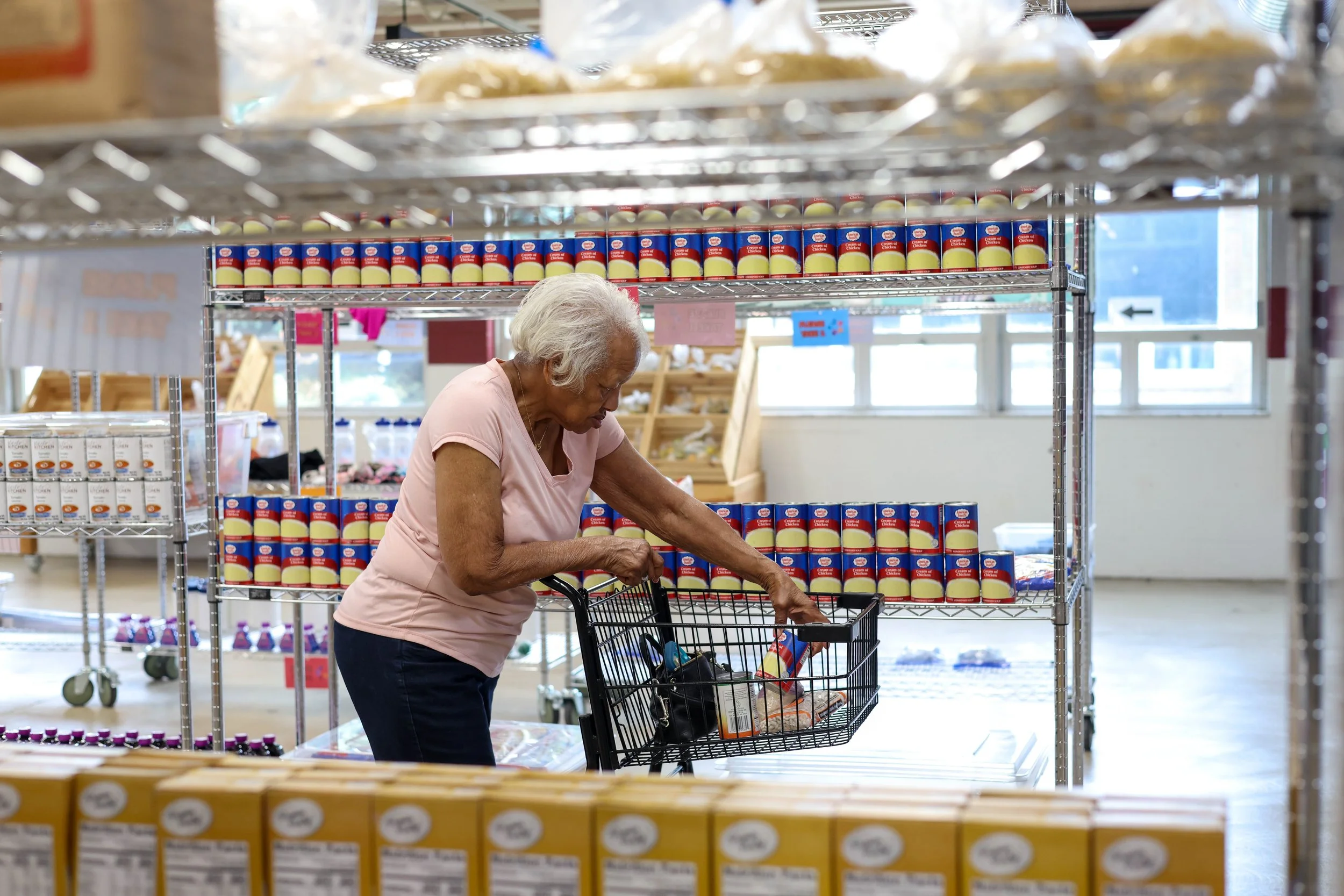
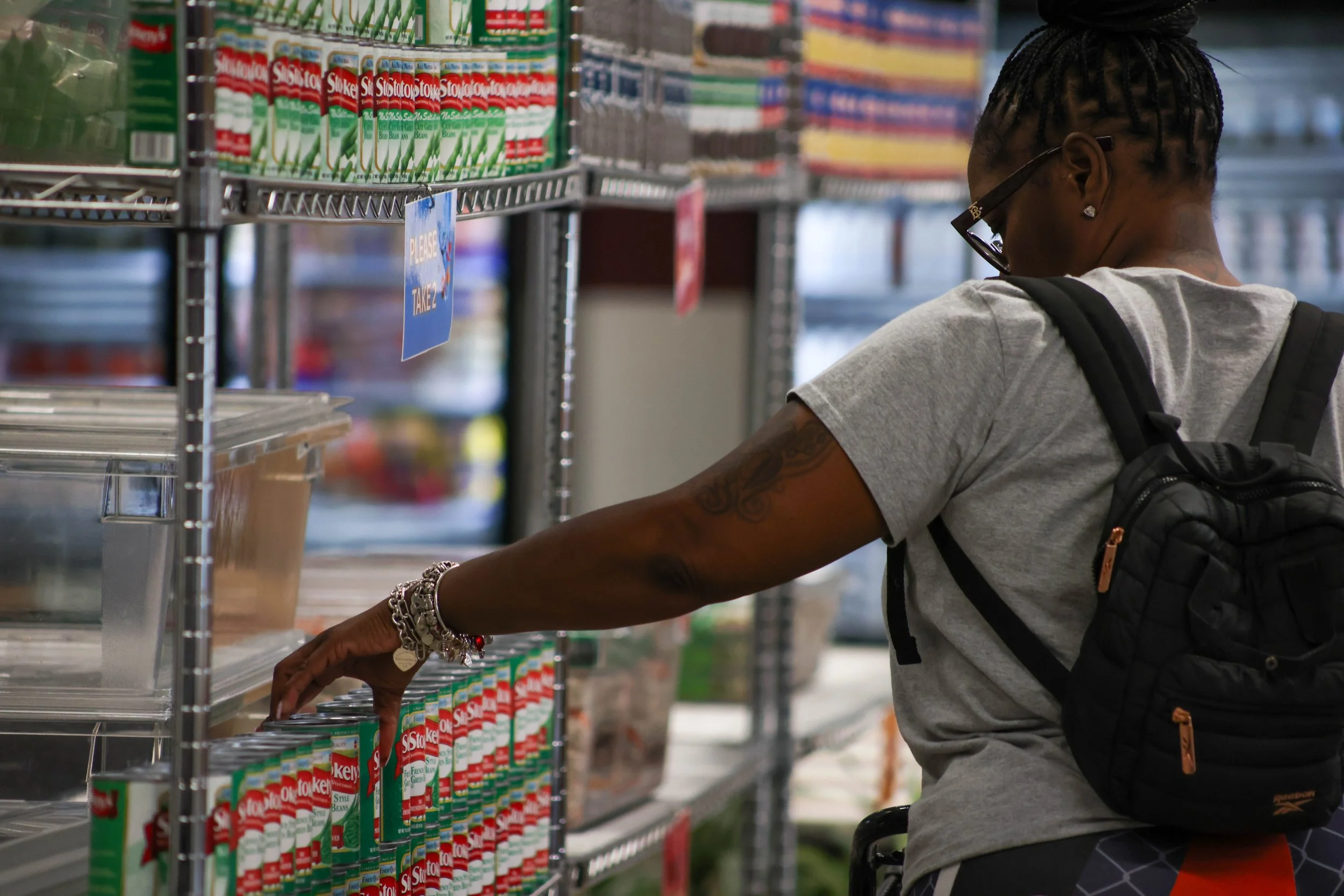
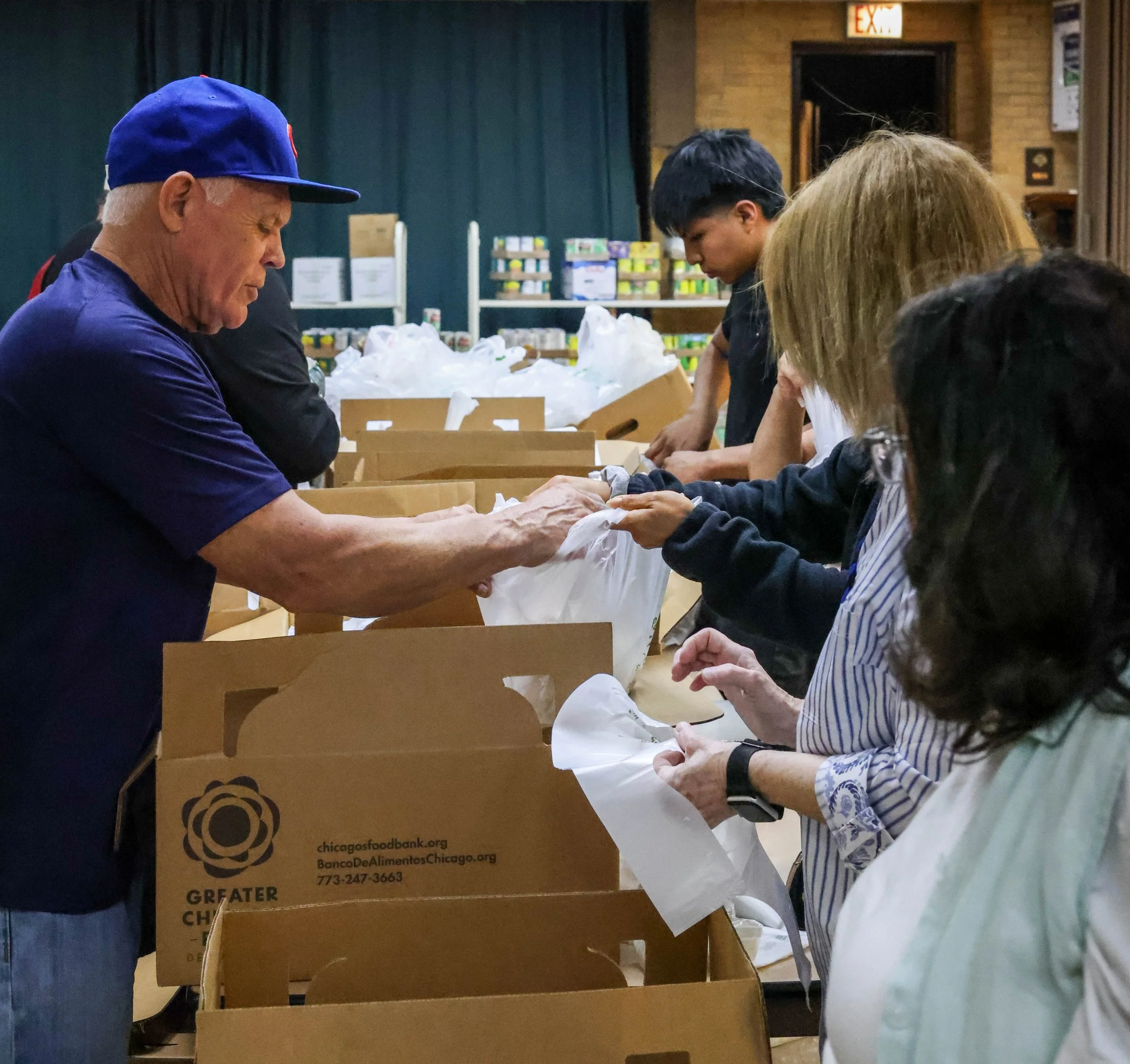
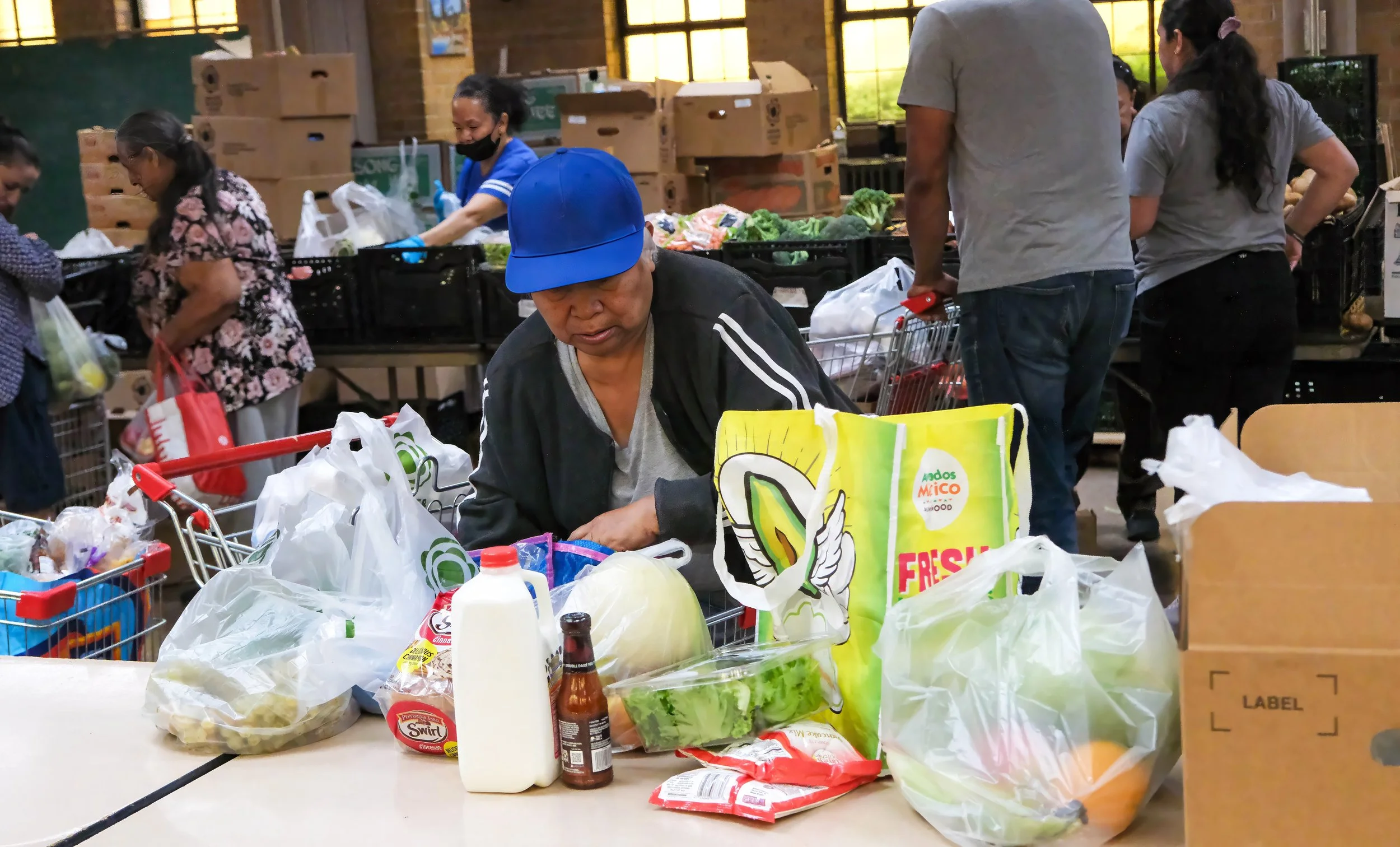
Montage of food pantry volunteers across three Southwest Chicago suburb pantries, photographed in late spring, distribute their produce or inventory of canned goods to local residents as an increased need after SNAP cuts. NaBeela Washington/15West & Cicero Independiente
By Nati Madrigal and Georgia Rau
This story was produced in collaboration with 15 West.
For the last four years, Jose Juarez and his family have visited the Cicero-Berwyn-Stickney Food Pantry every other week to help feed himself and his five children. Juarez cites his consistent decrease in SNAP (Supplemental Nutrition Assistance Program) benefits as the reason, forcing him to seek additional assistance elsewhere.
For Juarez and countless individuals in his position, food pantries aren’t merely an additional resource or a safety net, but rather, are a necessity essential for survival.
Beginning May 1, 2026, SNAP changes have restricted food assistance to up to 150,000 Illinois households, disproportionately affecting immigrant families and households without dependents.
In areas like Berwyn and Cicero, where immigrants account for 32.8% of the population across both cities, the consequences are particularly noticeable, leaving many households susceptible to the new eligibility criteria. Food insecurity has already been a critical concern in these communities.
In 2023, an average of 29.3% of people in Berwyn and Cicero reported not having enough food and being unable to afford more, according to Data USA. However, as uncertainty grows, so does the resolve of residents and groups combating hunger. With SNAP cuts and program changes limiting access to food aid, local pantries are becoming an even more valuable lifeline for struggling households.
Among these pantries are Mano a Mano Unidos, the Cicero-Berwyn-Stickney Food Pantry, and Heart2Heart Food Mart who all have one thing in common: Striving to ensure that no one is forced to endure hunger on their own. These organizations are supporting residents experiencing food insecurity through food distribution, community outreach, and no-cost assistance. Their stories provide a closer look at the people and services who work tirelessly to keep local families fed.
Mano a Mano Unidos (MAMU)
Cicero Independiente has reached out to Mano a Mano Unidos for photographs and interviews with recipients and volunteers, but we have not received a response.
During the height of Operation Midway Blitz, Patricia Gamboa and Rachel Breve spent weeks delivering food to residents too afraid to leave their homes and decided that they no longer wanted to remain on the sidelines. Rachel would pack the bags, Patricia would write down the addresses, and the two split up to provide groceries to families in need.
What started as an informal distribution network for immigrant families quickly grew into Mano a Mano Unidos (MAMU), an organization that helps anybody in need, providing food, clothing, backpacks, hygiene products, and other necessities to people and families without limitations on location or eligibility requirements related to housing or legal status.
Assistance is provided through a combination of appointments and walk-in visits as opposed to traditional weekly/monthly distributions limited to local residents, with no proof of identification or residency required — a particularly helpful aspect as many traditional food pantries may restrict assistance based on where a recipient lives. Volunteers frequently respond to emergency requests for needs like food, diapers, and baby formula. Residents can request assistance by calling (847) 201-1521
Breve describes her transition into the organization as organic, molded by a lifelong commitment to service.
“I’ve always done community service… if there’s a need, I’m always there,” she remarked. “I can’t see a need and not do anything about it.”
This mindset has become MAMU's foundation. At the very start of their operations, Gamboa and Breve even traveled as far as Minneapolis during Operation Metro Surge to deliver groceries, many of which they bought themselves, to families in need.
“We service and we give out what we receive,” Breve stated. “The greater the need, the quicker we service.”
Now, the pantry relies on contributions from residents, churches, and partner groups, counting on support from donors and volunteers across the western suburbs, such as Oak Park, LaGrange, Brookfield, and Hinsdale.
At the same time, demand in the community is increasing. Beve stated that families have told her that they are receiving less support due to SNAP benefit changes and rising economic stress.
“People have been saying ‘we used to get $250 or $300 [in benefits]’, now they’re getting like $90,” she said. Cash donations have become increasingly important, allowing volunteers to purchase specific necessities when donated supplies run low.
At its core, Mano a Mano Unidos is based on a simple principle: respond to needs as soon as possible, without barriers, judgment, or needless red tape — such as, applications, processing delays, non-citizen eligibility, work/residency requirements, etc.
This strategy has helped the organization establish trust with members of the community who may be hesitant to seek aid. Breve noted that the pantry aims to establish a warm and welcoming environment in which people feel comfortable seeking assistance during times of financial hardship, housing instability, or food insecurity.
“Nobody should be ashamed to come and ask for help,” she said. “That’s why we’re here.”
As economic difficulties continue to impact households in Berwyn, Cicero, and beyond, Breve indicated that the organization is committed to its core mission. Whether guided by its founders or a future generation of volunteers, Mano a Mano Unidos intends to continue helping the community as long as the need continues.
“As long as there's a need,” Breve declared, “we will meet those needs.”
Cicero-Berwyn-Stickney Food Pantry
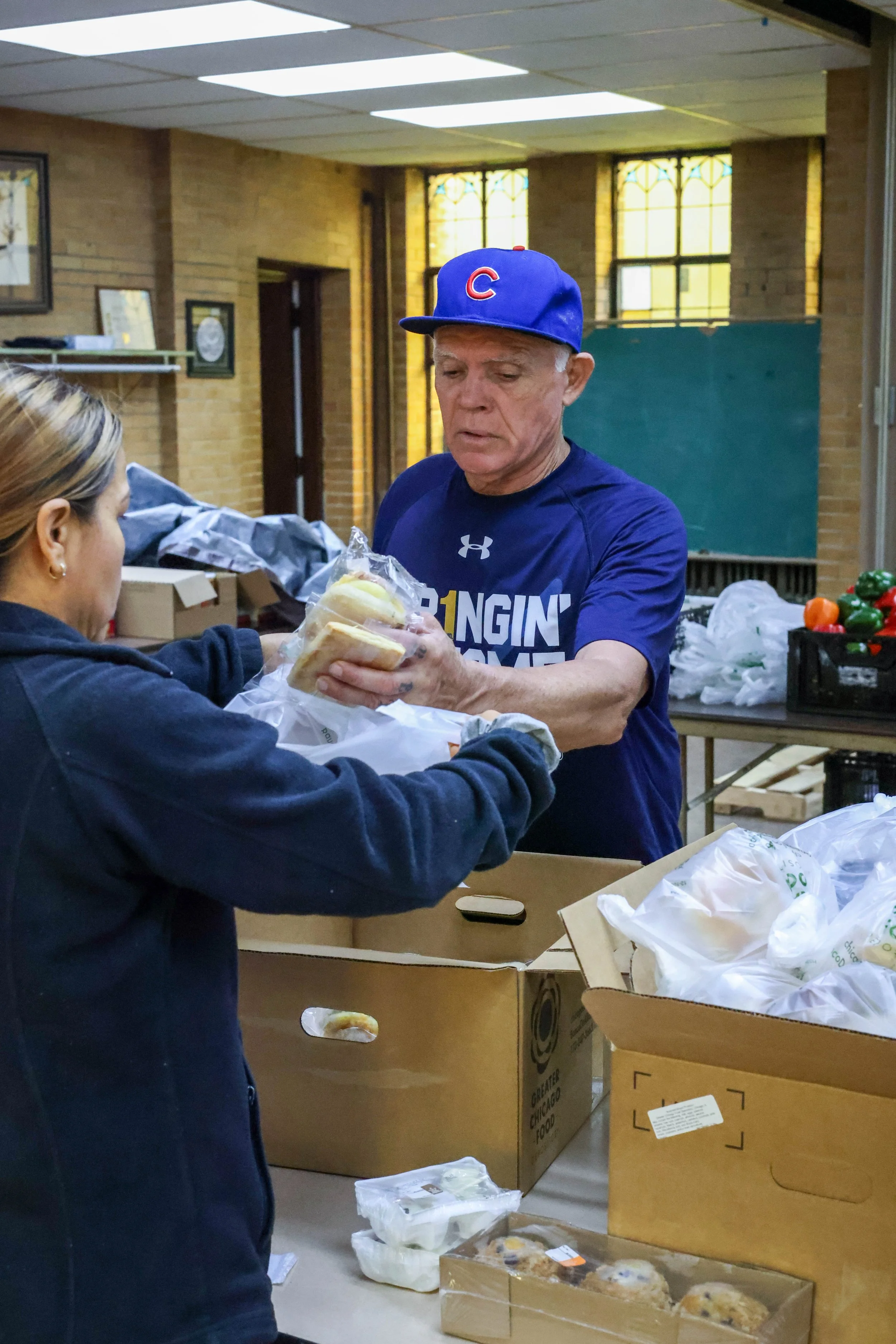
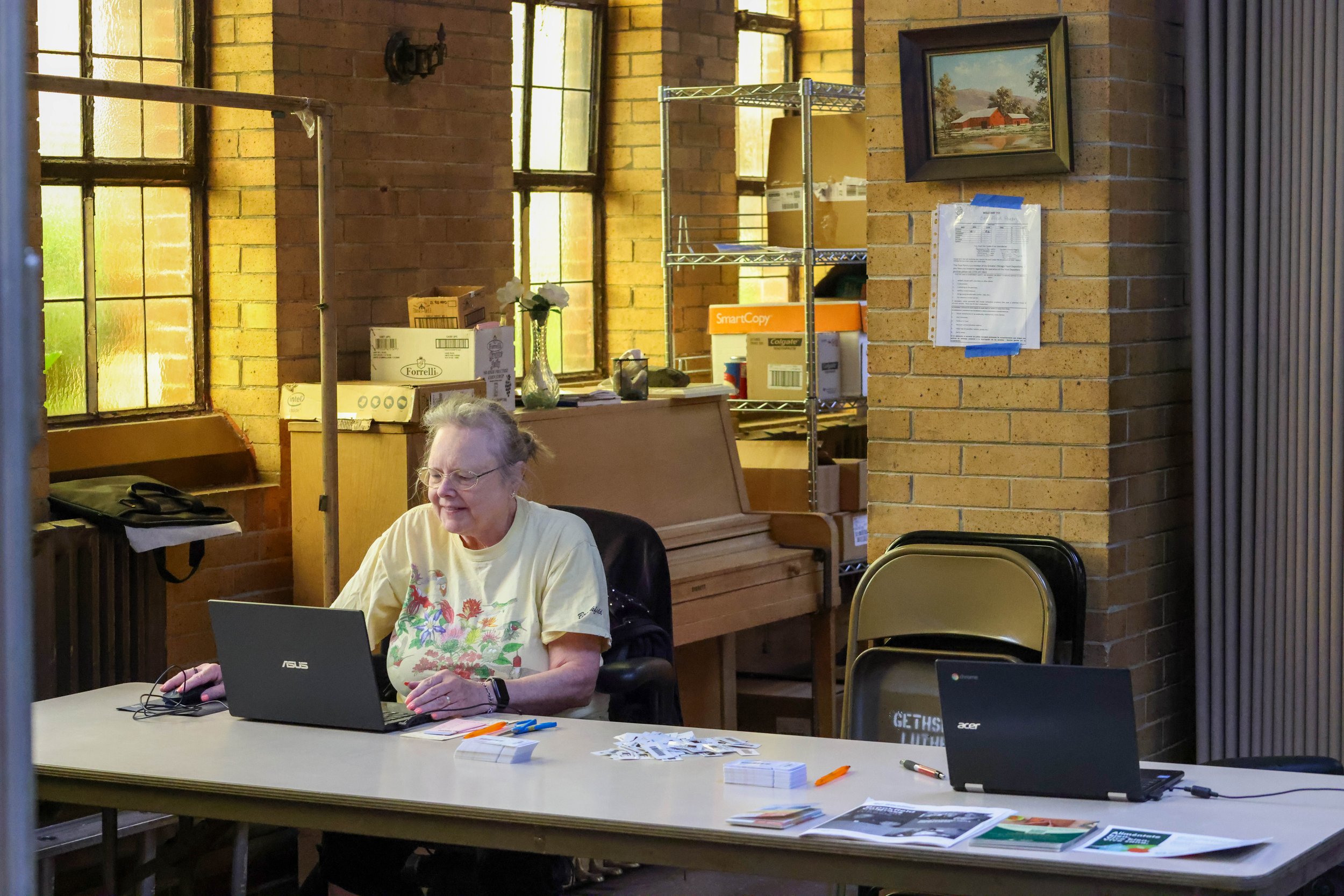
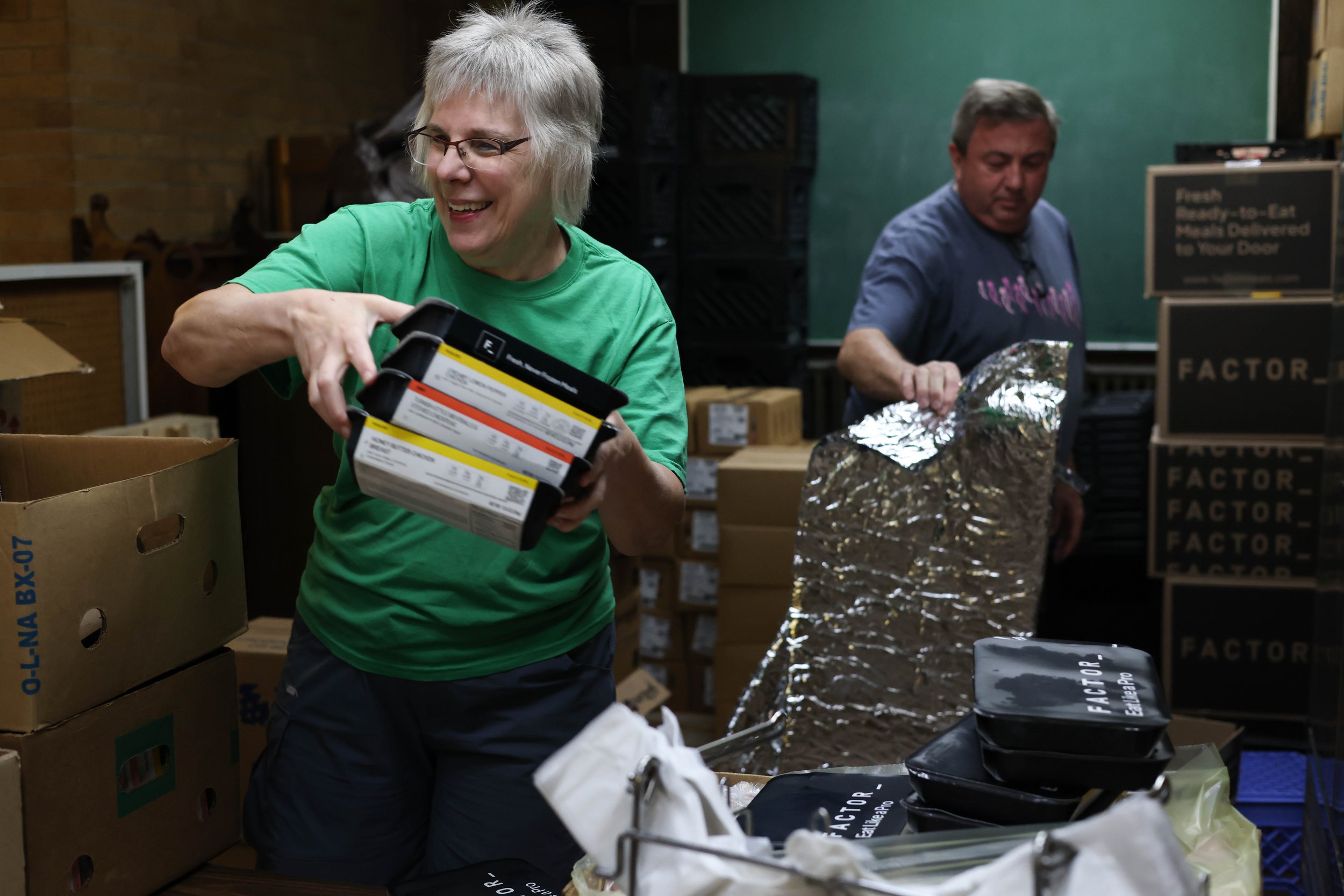
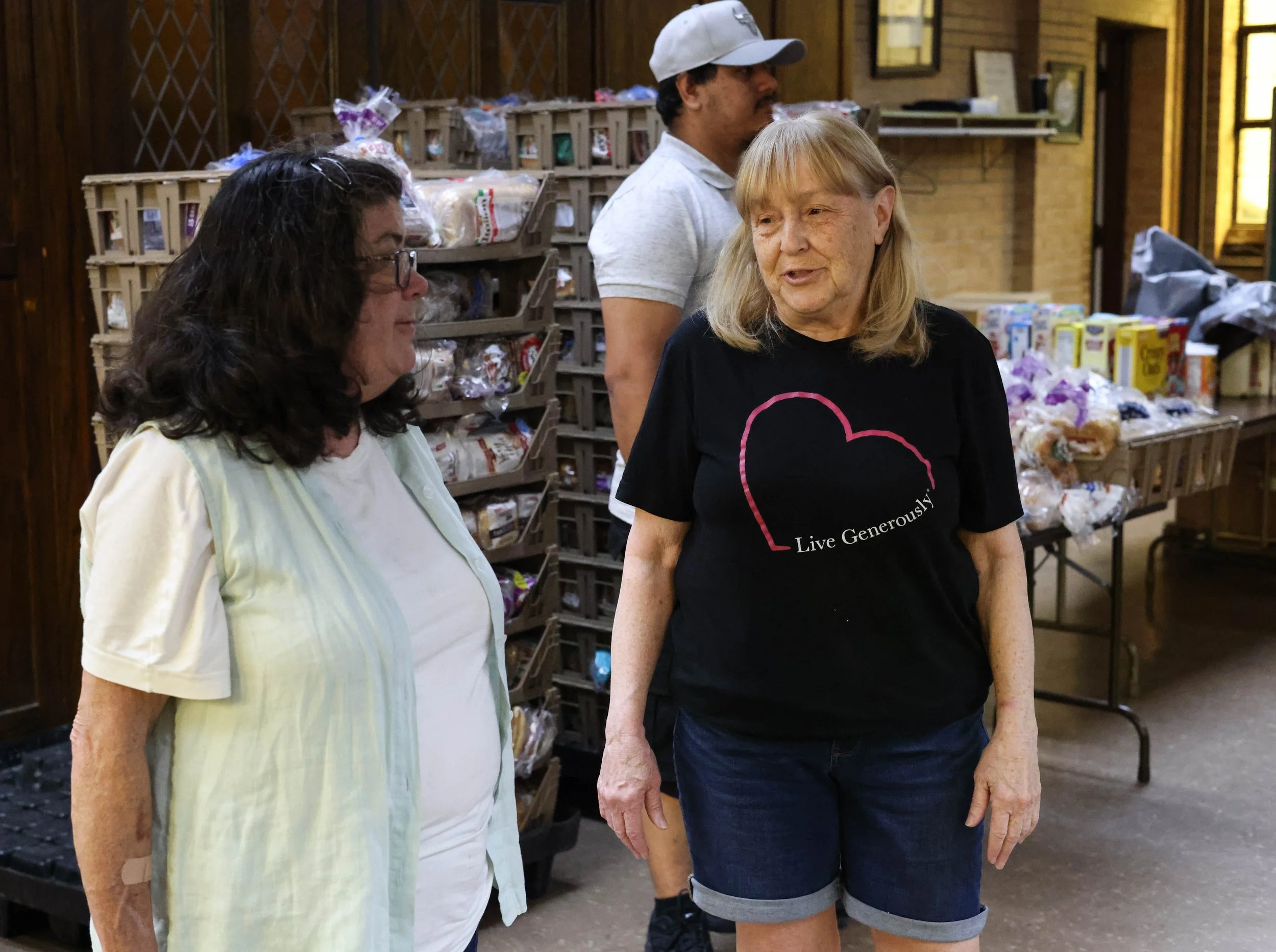
Montage of Cicero-Berwyn-Stickney (CBS) Food Pantry volunteers during their Tuesday food pantry day on May 26, 2026. NaBeela Washington / 15 West & Cicero Independiente
Carol Nenne, 70, has been with the Cicero-Berwyn-Stickney Food Pantry (CBS) since it began in the mid-1980s as a bookshelf of free food. Now, Nenne is the pantry’s treasurer and board liaison.
“I just saw a need in our community, and our church started getting involved with it, and so did I,” Nenne said.
During SNAP benefit rollbacks, CBS staff, like Nenne, continue to help the community at the forefront, finding joy in smaller wins. Nenne recalls a story from last month about a man at the pantry. CBS offered its guests chicken, ground beef, fish and sausage.
“He said, ‘Oh, I don't know which one I'm going to pick,’ and we said, ‘No, no, you can have one of each,’ and he just started crying,” Nenne said.
Two years ago, the pantry served an average of 120 families per week, and its reach has grown roughly 40% over the past several years. Now, CBS gives out 8,000 to 10,000 pounds of food and feeds about 175 families per week, Nenne said. She attributes this growth partly to food assistance rollbacks by the Trump administration.
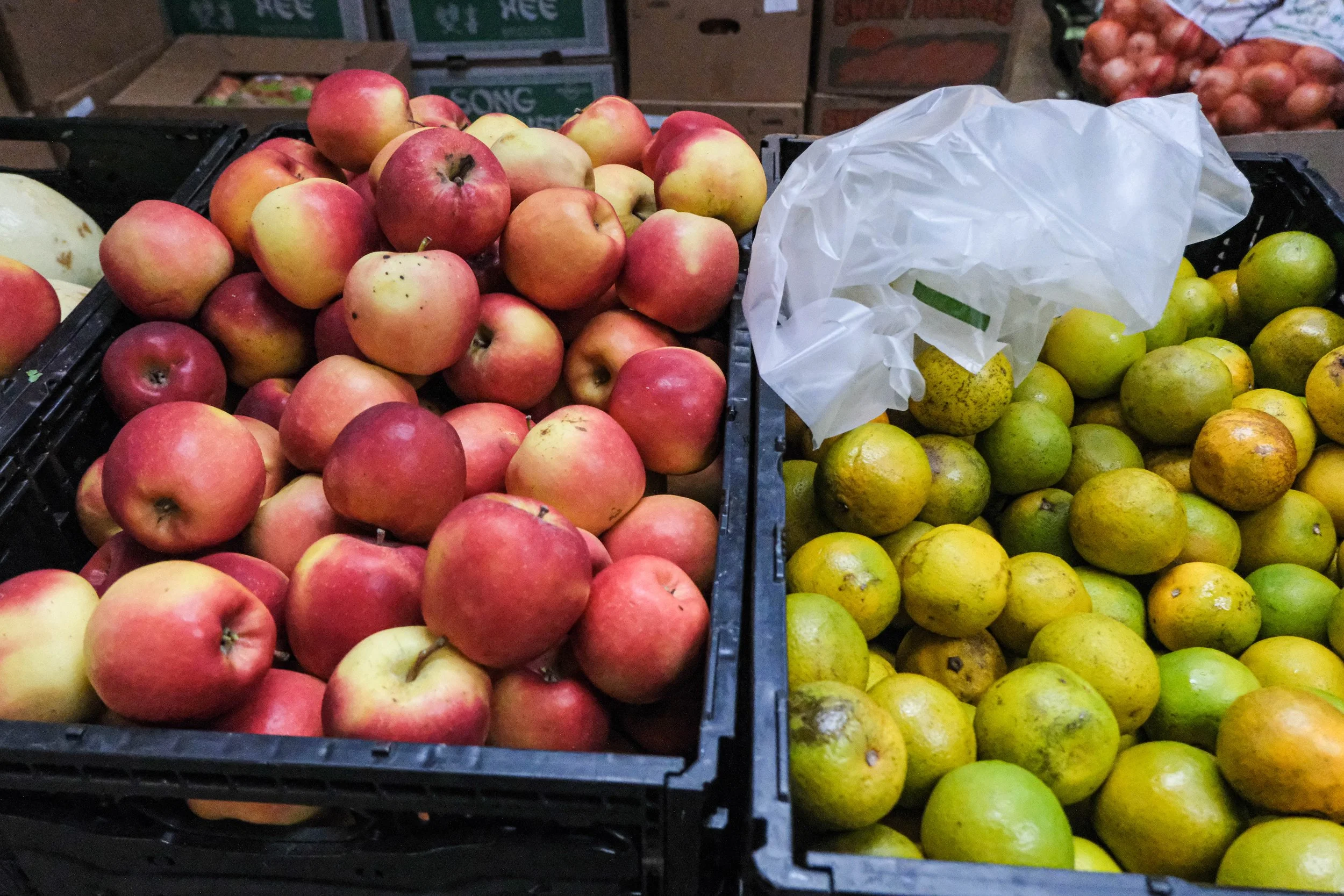
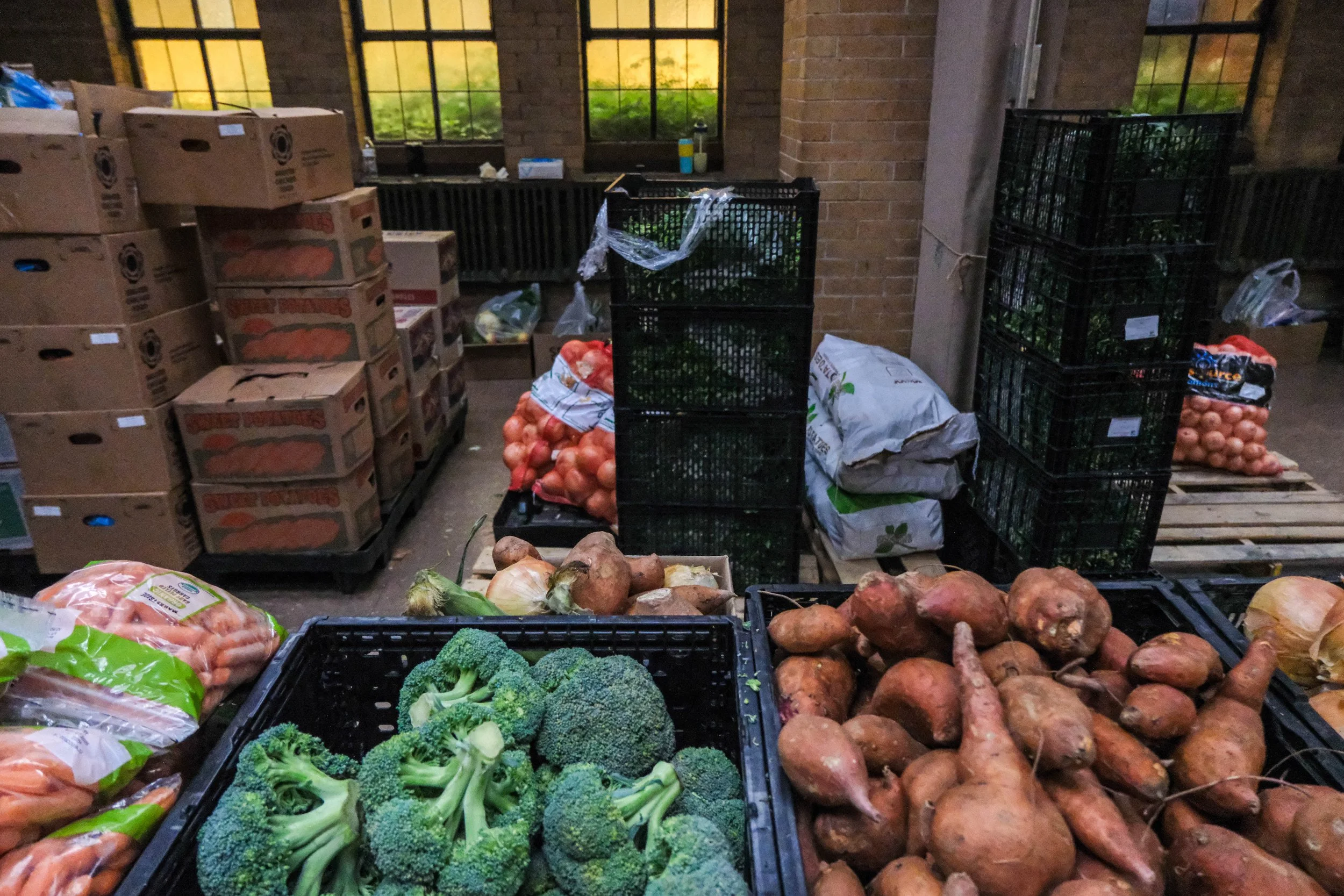
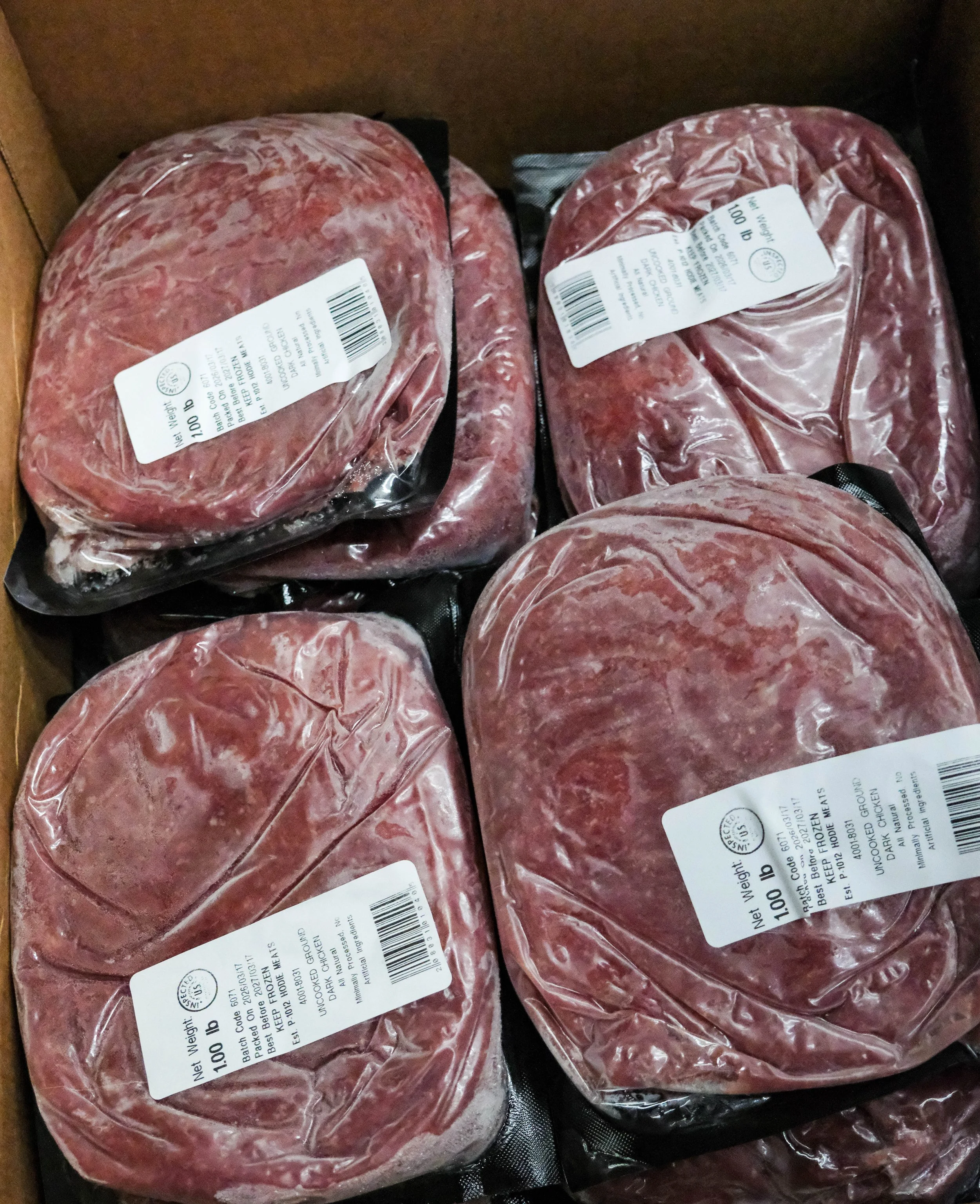
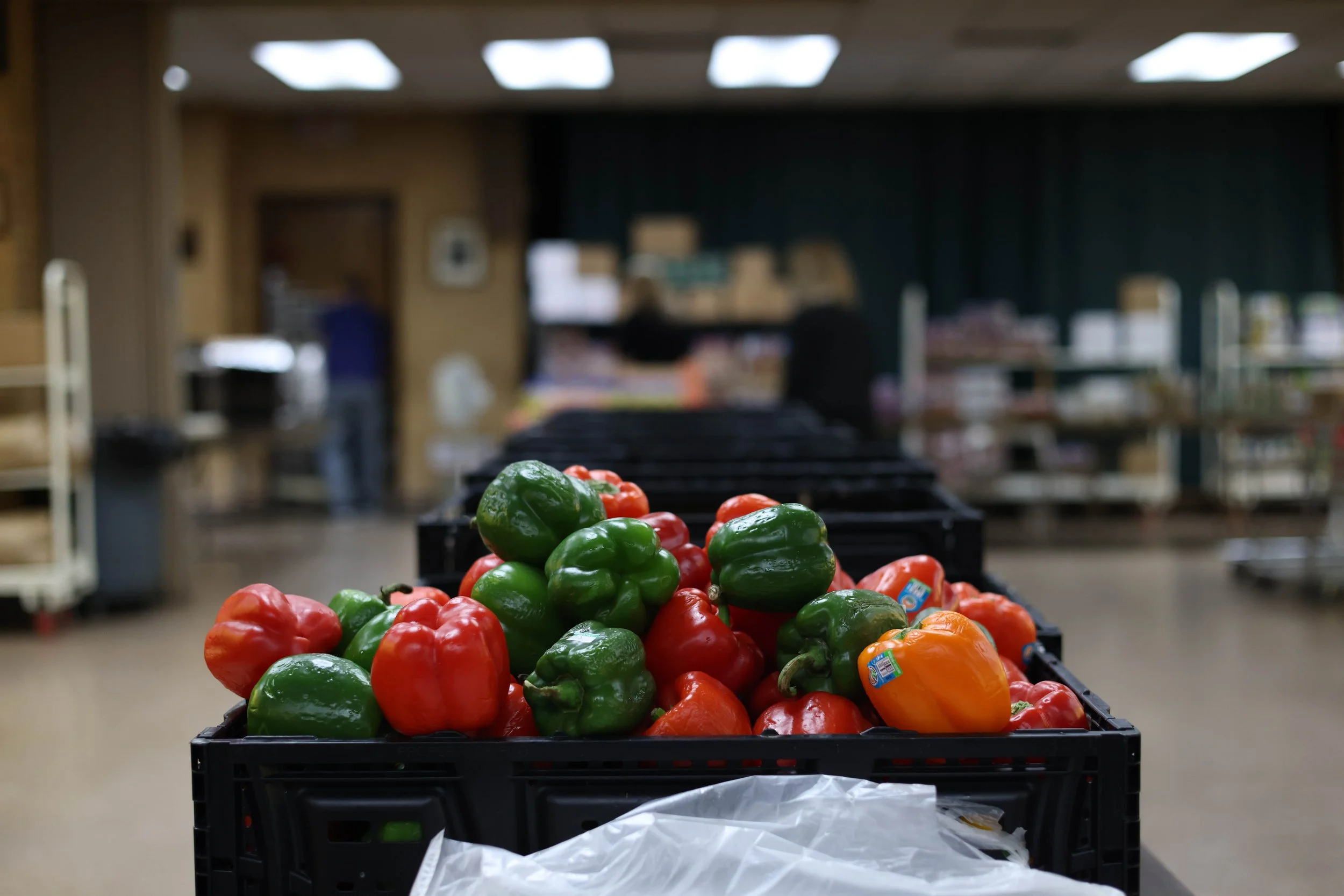
Montage of Cicero-Berwyn-Stickney (CBS) Food Pantry food during their Tuesday distribution on May 26 and June 1, 2026. NaBeela Washington / 15 West & Cicero Independiente
“Especially since the SNAP benefits have kind of gone away, there's a lot of people who need things more now than ever,” Nenne said.
“I have to come look for help in other places because the assistance we were getting went down,” Juarez said. “So we have to look at other options to survive, more than anything.”
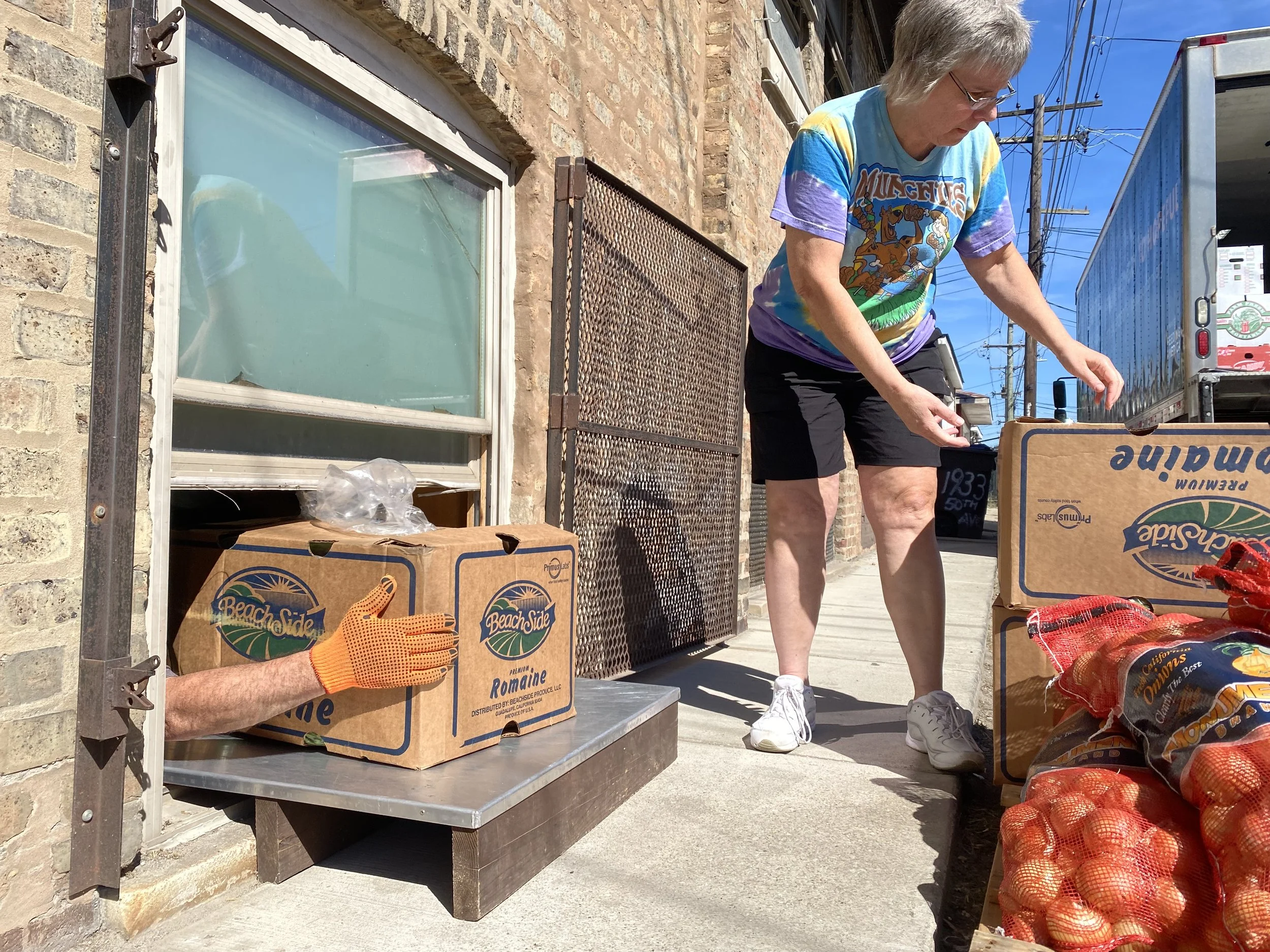
With help from the Greater Chicago Food Depository (GCFD) and local organizations, CBS has sustained services for its community. The GCFD has been “extremely generous” with deliveries, Neene said. The local post office, schools and churches contribute through food drives and volunteer groups.
CBS is run in the basement of Cicero’s Gethsemane Lutheran Church at 1937 South 50th Ave, though they also offer food deliveries to those with accessibility constraints. Distribution occurs from 10 a.m. to noon every Tuesday, and clients are allowed to use the pantry every other week. The pantry serves residents of Cicero, Berwyn, Stickney, or Forest View, according to their website. CBS also provides carts and boxes for residents to transport their food.
Juarez recommends that residents look at the CBS social media page to see what they are providing.
Nona Szuck started volunteering at CBS in 2025. Like many of the pantry’s volunteers, she started coming to the location for food assistance herself. She, too, has noticed the SNAP cuts have “tremendously” impacted the need for food assistance in the community.
“You're seeing a legitimate— what I believe is a legitimate— need, and with the cops and with the volunteer working cuts, you're going to see more,” Szuck said.
Nenne thinks that ICE presence in the community has discouraged some people from leaving their houses, which has stalled the impact of SNAP cuts on CBS, she said. Now, people need more help, but many are scared to receive it.
Still, people do not tend to take more than they deem necessary.
“We hear a lot of people that will come through, and if they have something, they won't take it,” Szuck said. “They'll say, ‘let me leave it for the others that need it.’”
Heart2Heart Food Mart
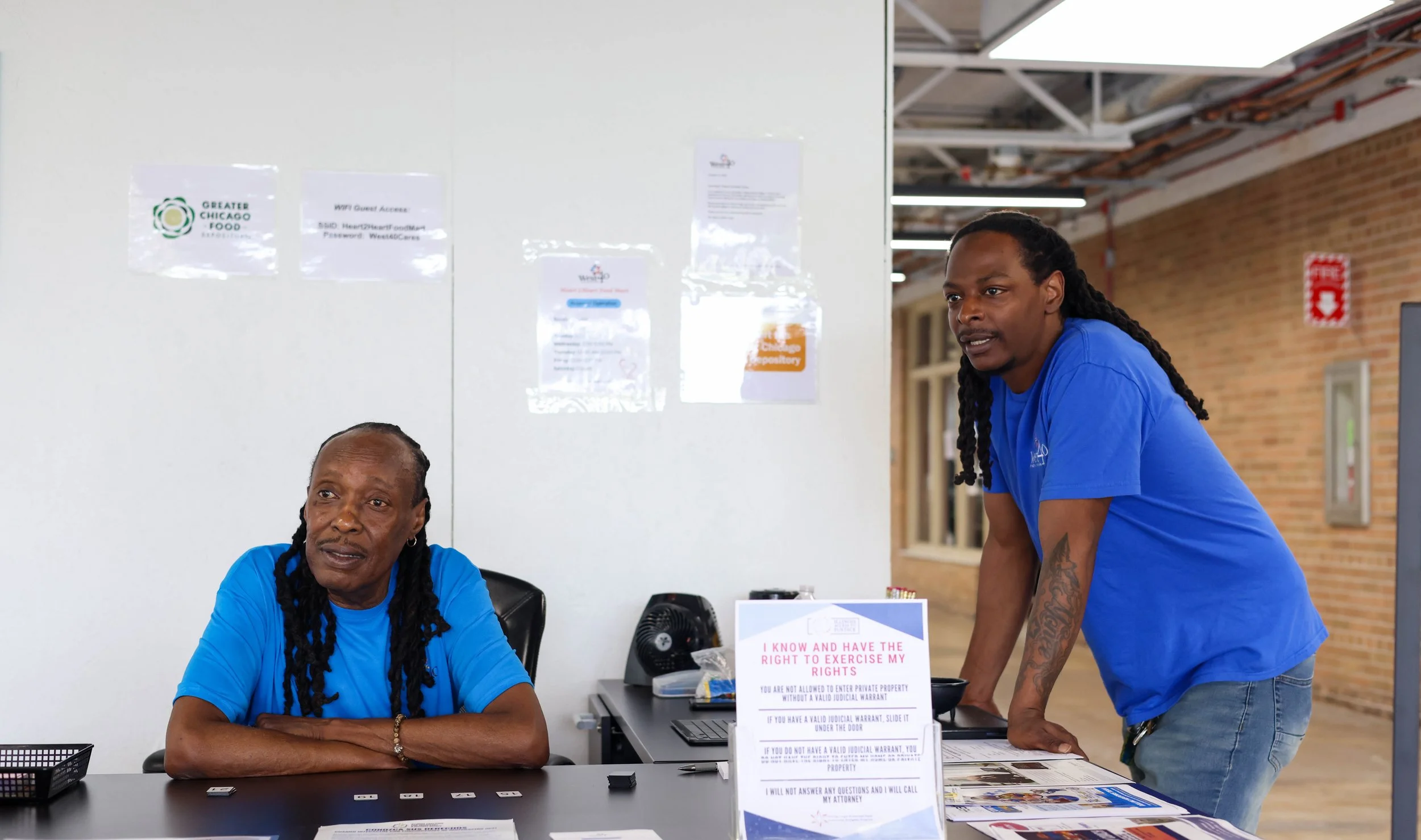
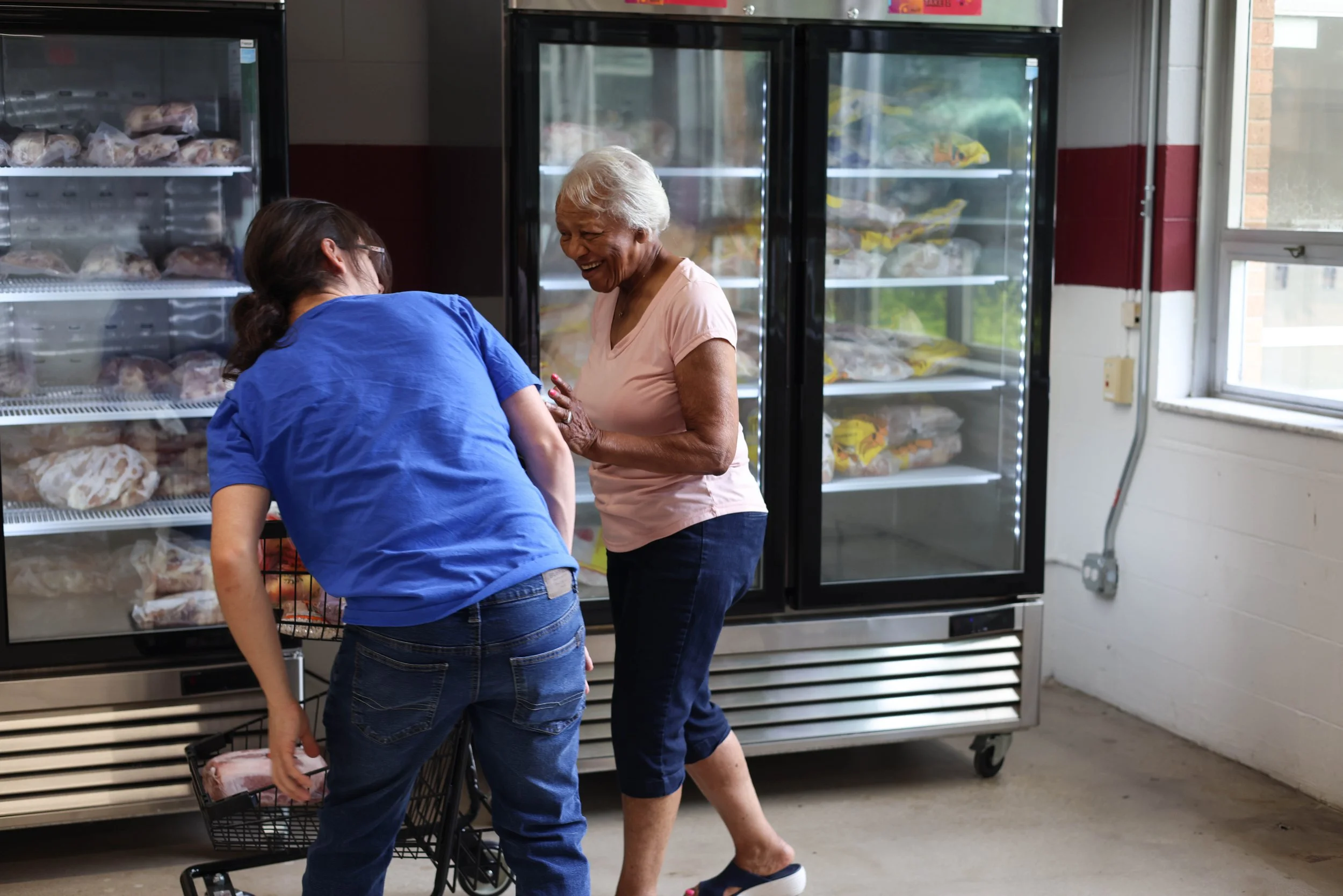
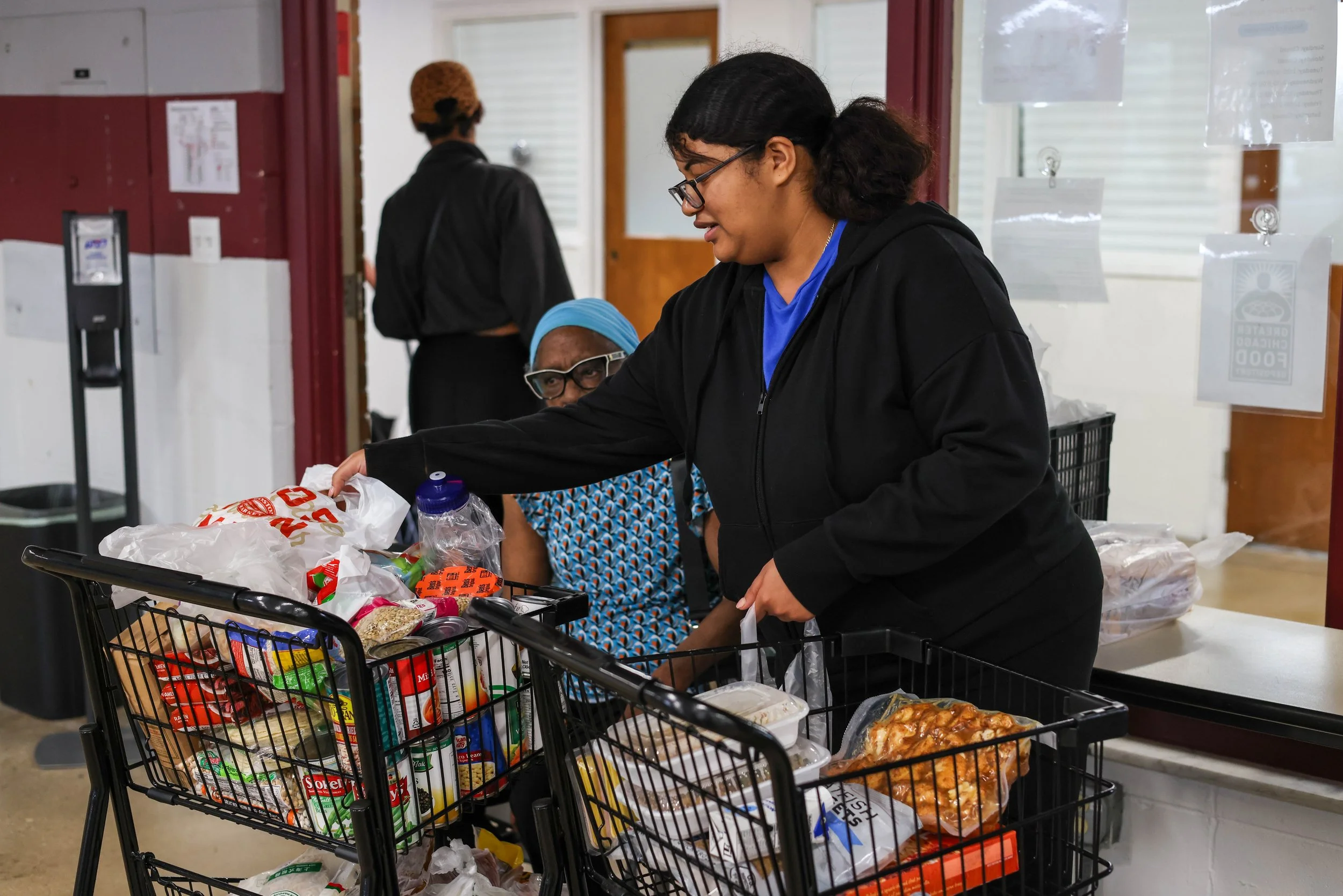
Montage of Heart 2 Heart staff and food pantry attendees on May 26, 2026. NaBeela Washington / 15 West & Cicero Independiente
Heart 2 Heart (H2H) food mart serves people across the Greater Chicago area. At H2H, staff tries to get to know guests on a personal level by joking with them and walking with them through the space, said David Walker, Jr.
A few months ago, H2H was serving roughly 100 people per week. After Link card access was rolled back, that number jumped to 250, said Walker.
“We took it as a good thing, because that's an opportunity to help out more families in the community,” Walker said.
Among the many people H2H serves is Patricia Williams, 53. She learned about the food mart from a friend and appreciates the mart’s organization, particularly its freezers. Williams has been affected by SNAP benefit rollbacks and goes to food pantries monthly to make up for what food stamps will not cover, allowing her to feed her two sons, she said.
“I love that they have the freezers, because the one that I normally go to doesn’t have freezers, but I got a lot of spoiled milk,” Williams said.
H2H, which is under the nonprofit West 40, has been able to sustain its operations through connections with GCFD, other food pantries and local businesses. A local photography studio donates food from commercial shoots— Subway sandwich meats, vegetables and dressings in bulk were stocked in one of the mart’s freezers beside yogurt and protein shakes. Starbucks sandwiches and pastries are also donated.
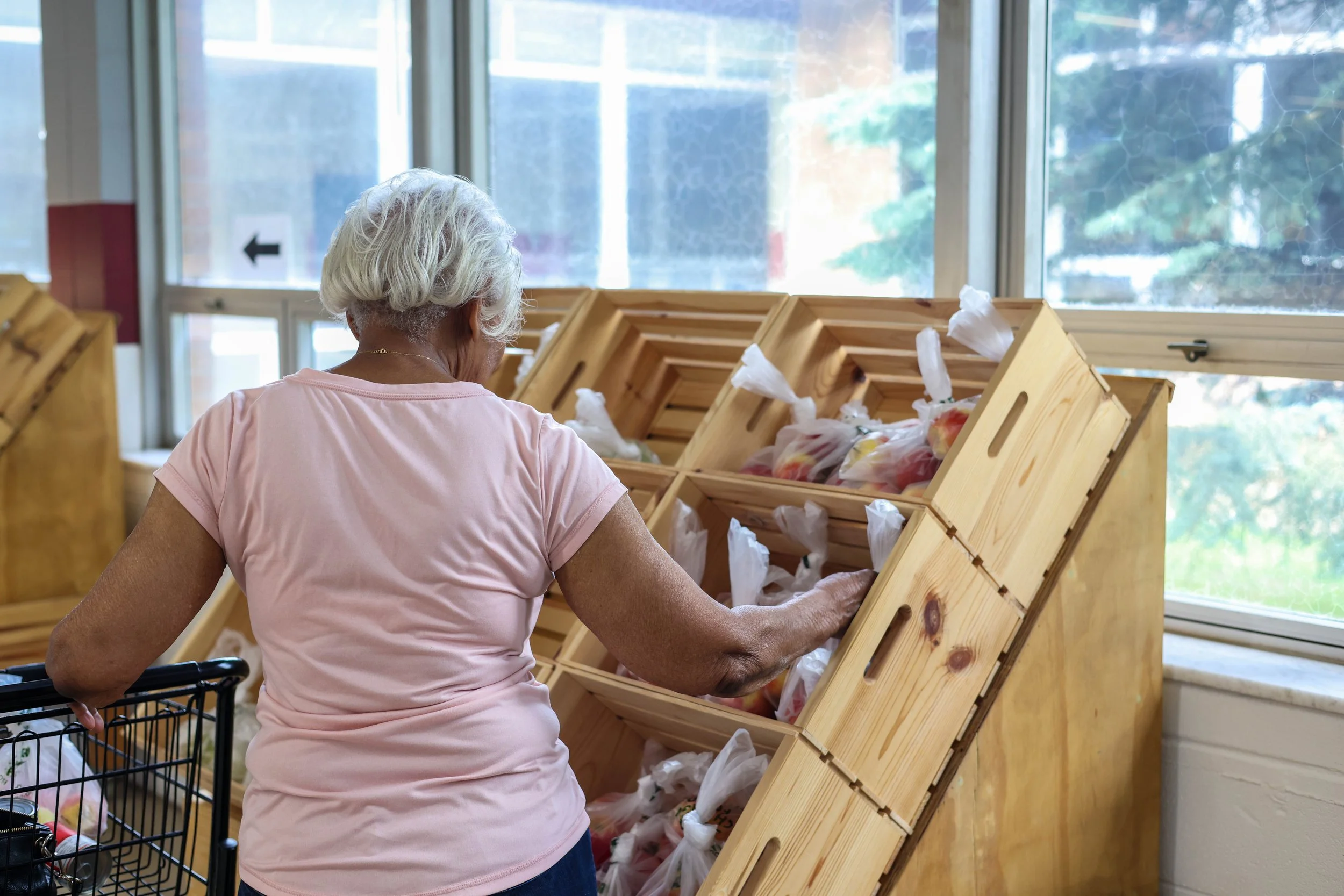
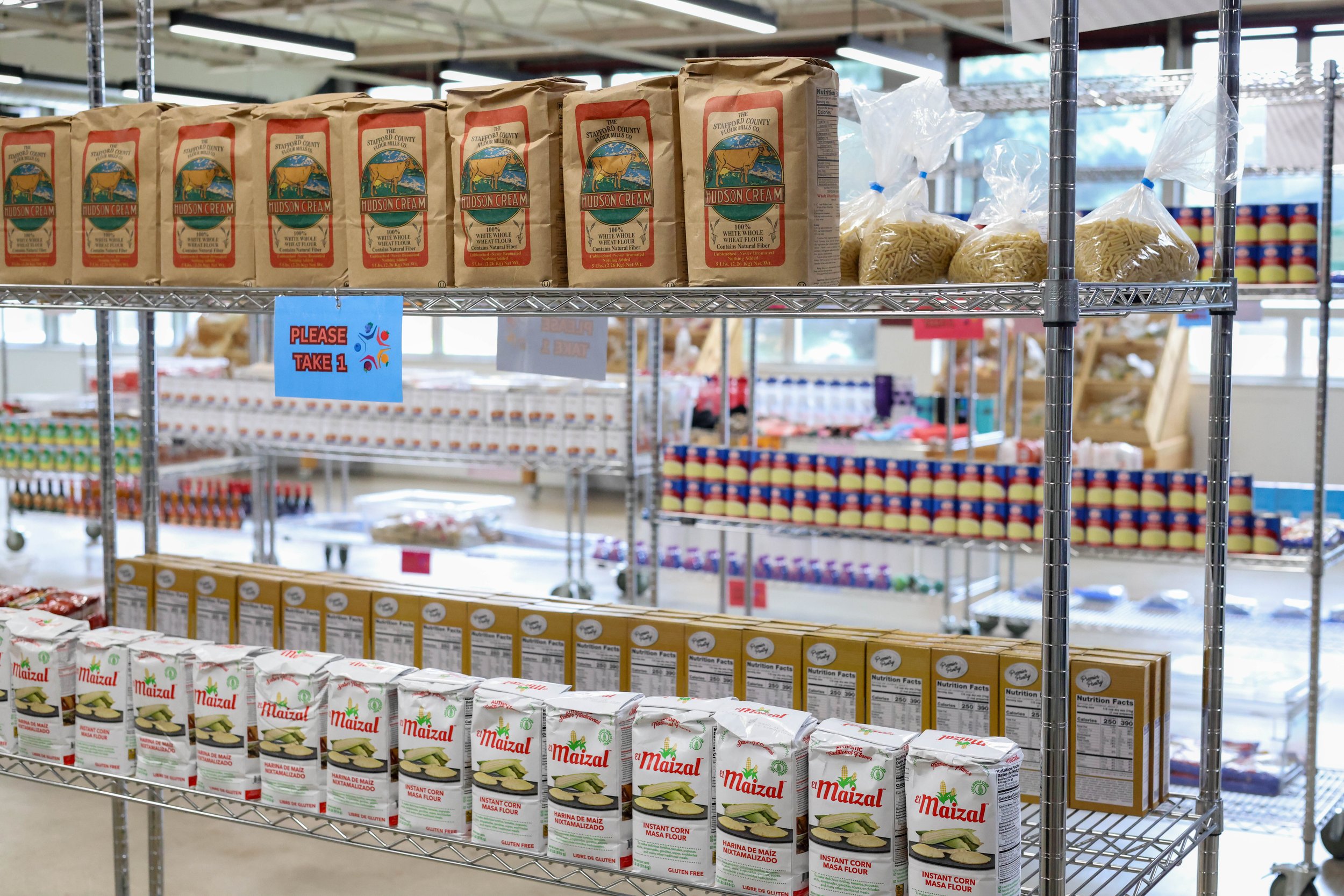

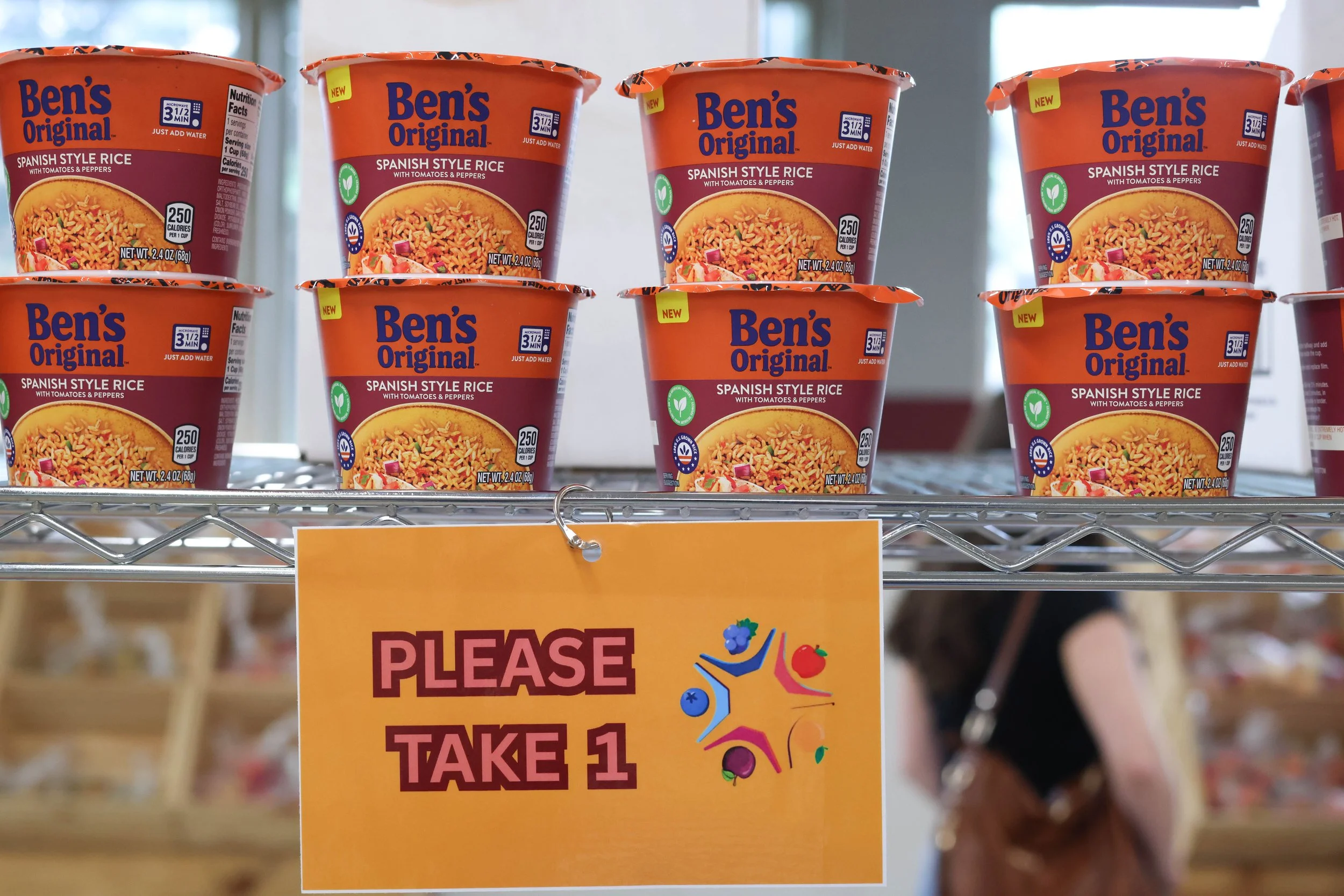
Montage of Heart 2 Heart Food Pantry food during their distribution onMay 26, 2026. NaBeela Washington / 15 West & Cicero Independiente
In fact, Walker himself donated products to H2H as a lead in the dairy section of a Mariano’s grocery store before he began working at West 40.
Relationships with other pantries prevent food waste and maximize benefits for community members. When one pantry has too much stock, they’ll donate it to another that can find someone who needs it. Typically, H2H is on the receiving end, taking refrigerated items like juice, milk, eggs and cheese, as most food pantries do not have adequate refrigerated storage space, Walker said. The most recent exchange was three months ago.
Walker and his team try to make guests feel as comfortable as possible. The mart keeps its aisles and shelves clean and organized, with laminated signs providing quantity limits. The H2H team guides guests through the various sections, from non-perishables and produce, to frozen items, and bagging stations. Then, team members wheel carts of food to the parking lot and help guests load their cars.
“We enjoy working here, serving our community as a whole, getting to know people on a personal level,” Walker said.
Anthony Abel Sanches, 19, has been involved with H2H for almost two years. Previously, he had been involved with other community groups, but he felt as though he was not making a real difference, he said. At H2H, Sanches said he can have a tangible effect on people.
Sanches has always been drawn to community impact work, though this interest originally came from guilt. If he did not do something selfless, he worried that it would negatively impact others, he said. At H2H, however, his mentality has changed.
“Now I do it because I want to, not because of guilt, and I really like helping people put food on their tables, you know, feeding their kids,” Sanches said.
Another guest, Catherine Mendez, 24, heard about the organization from her mother-in-law. As food prices increase, she tends to need more food toward the end of the month. She loves to bring back yogurt — her two-year-old son’s favorite— Mendez said.
H2H is not zip-code restricted, and distribution occurs on Tuesdays from 1 p.m to 3 p.m., Wednesdays from 3 p.m. to 5 p.m., Thursdays from 10 a.m. to noon, and Fridays from noon to 2 p.m. The food mart also provides shopping carts, bags, and wagons to transfer the food into a vehicle, which food mart staff helps with. Staff members also help with the bagging process for those with mobility issues.
Walker and his team hope to continue growing the food mart and serve more families in the future. Their goal is always to increase their reach among community members, Walker said. He encourages people to bring friends or give them flyers with business hours.
“The experience some of these families tell us they have been through, and to see how happy they are after complete strangers help them, and them getting to know us … It's very rewarding,” Walker said.
Natalia Madrigal is a freelance journalist and graduate student at Northwestern University's Medill School of Journalism whose work spans culture, entertainment, and community storytelling. She has written for university, local, and independent media publications, covering stories which encourage diverse voices and creative communities.
Georgia Rau is a freelance writer and journalist based in Evanston, Ill. focused on local news and politics. She is a junior at Northwestern University studying journalism and political science.



Want to read more stories like this? Consider donating to support our work. Your money goes directly towards paying journalists of color to report on local news.
SUBSCRIBE
Bringing you news from the 60804